
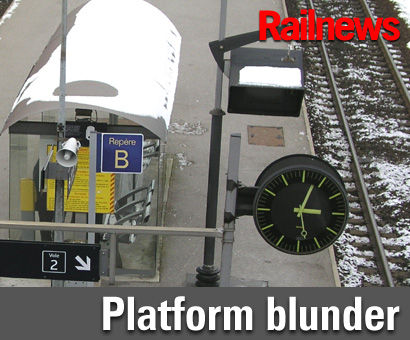
FRENCH operator SNCF is said to be facing a bill of at least 50 million Euros after discovering that hundreds of platforms will need to be adjusted or partially rebuilt because new trains for its regional network are too wide.
The revelation of the blunder has been followed by criticism of the Europe-wide separation of track and train, which the French transport minister described as 'absurd'.
The French rail infrastructure is the responsibility of a separate company, RFF, which is the equivalent of Network Rail in Britain. RFF is accused of giving the wrong platform dimensions to SNCF when new Régiolis Regional Express Trains from Alstom were being designed, and an RFF spokesman admitted that it had 'discovered the problem a bit late'.
The trains, known as Trains Express Régionaux or TERs, were first unveiled in Bordeaux in the summer of 2013 and then in Paris last month, but news of the clash of dimensions has only emerged in the past 24 hours. Alstom said in July last year that 182 of the 'next generation' TER trainsets had been ordered by 12 French regions.
However when asked for data about platform clearances it appears that RFF measured only relatively new platforms built since the 1980s, overlooking the fact that most stations are older and their platform profiles are tighter.
Work on adjusting the platforms has begun, but it is reported that around 1,000 will need their profiles corrected and that the final bill could reach 100 million Euros. An SNCF spokesman attempted to minimise the problem, agreeing that there were some issues but that they were "not as bad as some sources are claiming".
The error has also sparked new criticism of the wisdom of separating infrastructure operators such as RFF from train companies like SNCF, which has been the policy of the European Commission for more than 20 years. French transport minister Frederic Cuvillier said: "When you separate the rail operator from the user, it doesn't work."